

Before You Plant Your Veggies, Test Your Soil With This Mason Jar Hack
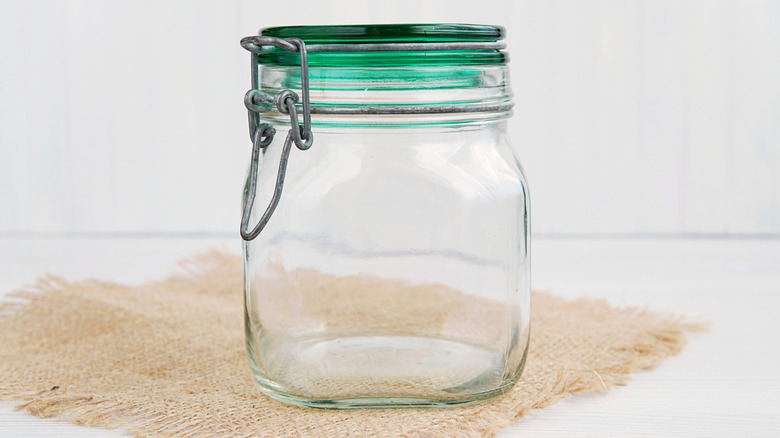
Planting in untreated ground is just one garden hygiene error that spells doom for your veggies, but how well do you actually know your soil? If you've been gardening your plot for several years, chances are you've done at least one soil test in that time and have a few insights into what it's made of, as well as its nutrient levels, and whether there are any nasties lurking in there. If you haven't, or you're a recent addition to the green-fingered brigade, don't worry! There's a brilliant way to find out about the composition of your soil before you plant a single seed, and all you need to get started is a clear, lidded mason jar, a handful of mud, and some water.
Make sure your pint or quart-sized mason jar is clean and has a straight edge — this will be important later. Fill it about half full with soil from your garden (you can do a jar for each part or put in mud from different sections, it's up to you), that's free from any bits of debris or rocks, and add water until it's about a half-inch from the top. Close the lid tight, then give the whole thing a good shake for several minutes or until the soil and water are evenly mixed. Set it to one side and let the contents settle completely. After several hours, the soil should have naturally divided into three layers; sand at the bottom, followed by silt, and finally clay.
Working out the math, and what those layers mean for your vegetable patch
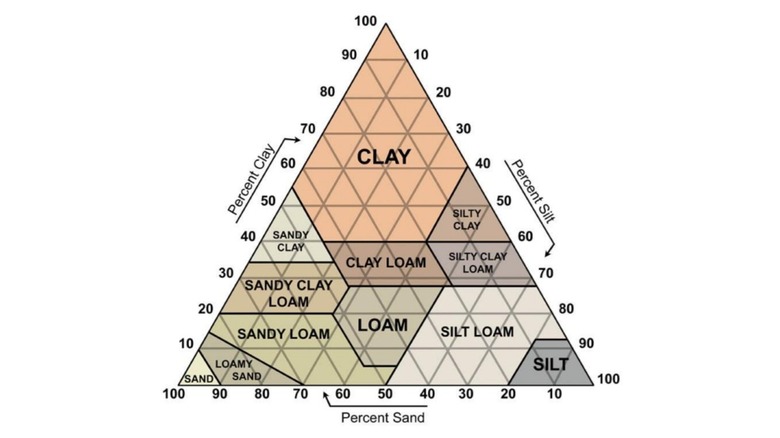
When you're certain the soil in your mason jar has settled completely, take a marker and draw a line between each layer (this is why a straight edged jar is better), then measure each one with a ruler to determine their percentage in your soil. Take those numbers and plot them on the triangle graphic from the USDA's Natural Resources Conservation Service — you can eyeball it if it's really obvious — and you'll get a better idea of your soil's basic composition. For many gardeners, this information is crucial for planning what they sow from season to season.
There are many places where you shouldn't raise vegetables, but knowing your soil can help you locate your plot more effectively. Heavy clay soil can be slow to drain and hard for air to circulate around roots, though it can also be nutrient rich. Sandy plots are ideal for vegetables like carrots or potatoes that like a lot of room, but this sort of ground also struggles to hold onto moisture, making watering your vegetable garden potentially tricky. The mason jar hack doesn't give you all the information you need to get the best out of your soil — it's worth following it up with a home soil test for nutrient or chemical insights, for example — but it's a good start. Do it at the beginning of every growing season and it can help ensure you choose the right veggies to grow at home.