

Grow Bigger Strawberries Than Ever With This Fertilizing Tip
We may receive a commission on purchases made from links.
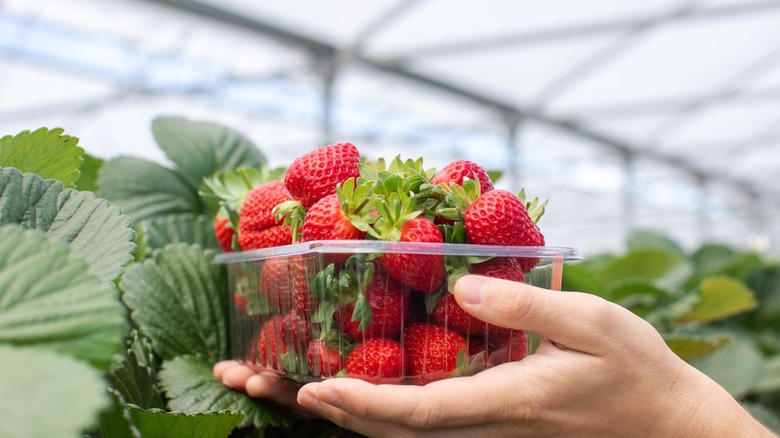
Growing strawberries can be an intensely rewarding gardening venture, because who doesn't love these sweet, juicy fruits? Whether you're considering making chocolate-covered strawberries or fantasizing about home-canned jam, the possibilities for enjoying strawberries are myriad and unanimously delightful. To that end, you might be wondering how to grow the fattest, juiciest strawberries, all the better for snacking and savoring. Turns out that, through judicious fertilizing, you can nurture big, bodacious strawberries to sate your cravings and feed your loved ones.
Proper fertilizing of strawberries takes place in the spring, when seedlings are planted, and again when the plant or plants start to fruit. Keep in mind that there are two separate types of strawberry cultivars: June-bearing and day-neutral plants, and the growth patterns of each are slightly different. A good all-purpose fertilizer for fat strawberries is a 10-10-10 formula that has a balanced, moderate nutrient load of nitrogen, phosphorus, and potassium. Some experienced gardeners claim that pushing extra potassium during that second fertilizing period when the plants are sprouting can lead to heartier strawberries. A granular, slow-release option like this 10-10-10 fertilizer by Gardenwise should do the trick, and we love the bounty of positive reviews! Whether you're growing your strawberries from seed or doing things the old-fashioned way by turning store-bought strawberries into the perfect garden starter, careful fertilizing of your plants is the best way to ensure that you grow the largest, yummiest strawberries on the block.
There are a few more things to know about effectively fertilizing your strawberries for max growth
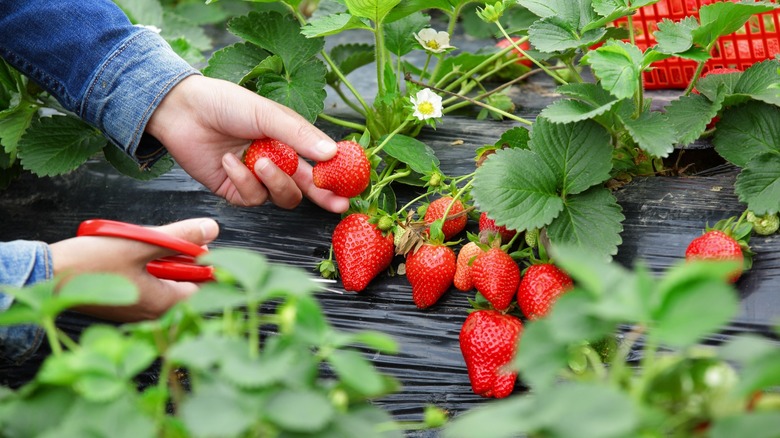
If you prefer all-organic fertilizers in your garden, you need not worry that you can't grow the plumpest strawberries. Picking the right natural fertilizers for strawberry plant fruit growth is critical, but well-studied. Choose compost (or even compost tea), nettle manure, or coffee grounds for big growth. A few words of caution: if using manure for fertilizer, only fertilize before the plants start fruiting, or your berries may take on a dreadful taste. We've covered tips for using coffee grounds as fertilizer in your vegetable garden, and they would also be germane to strawberry plants. Any fertilizer, whether mineral or organic, should contain only moderate amounts of nitrogen in particular, as too much can leave your plant(s) vulnerable to disease.
Another pro move that veteran home gardeners make is testing the soil of their strawberry bed before planting. If berries are to be planted in the spring, a soil test might be conducted in the fall so that results can come back and any necessary modifications can be made to the bed well in advance of planting. You might choose to fertilize the soil in the fall after a home soil test to guarantee that the conditions are right for planting strawberries and coaxing them to produce plump, ripe berries. There are also areas in your yard to should avoid planting fruits and veggies. Of course, if you're planting in one or more containers, this isn't something to worry about. Strawberries will grow readily in containers, which simplifies the matter for many amateur gardening enthusiasts, who can stick to the basic recommendation of fertilizing twice with the balanced plant food of their choice.