

Plant These Beautiful Flowers Next To Your Peppers For A Bigger Crop Than Ever
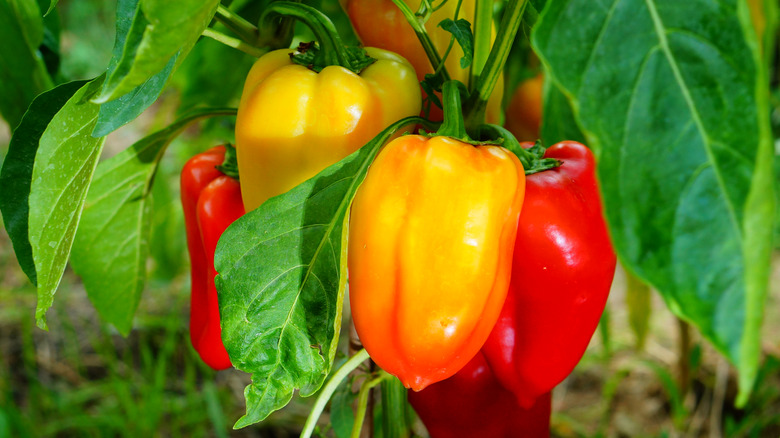
Home cooks who grow their own produce often dedicate every inch of their plot to plants they can turn into delicious food. There's no space in that precious territory for anything ornamental, right? But if you want bigger veggies, you need flowers! Members of the daisy clan, to be more precise. Science calls them asteraceae, and with over 32,000 species, it's one of the world's biggest families of flowering plants. You might already be growing some members of the daisy or aster family if you've planted lettuce, endive, or tarragon. In a bit of good news for gardeners, a few of their floral cousins make brilliant companion plants for peppers.
Let's start with marigolds. These little beauties have been scientifically proven to do a great job at deterring pests that target peppers. Marigolds generate pyrethrum, which repels hornworm moths, while they also produce alpha-terthienyl and limonene, compounds that disrupt the life cycle of root-knot nematodes — Public Enemy Number 1 for peppers! French marigolds, specifically the Lemon Gem, Nema-Gone, Disco Orange, and Tangerine varieties, have the best nematode-busting properties. Signet marigolds Paprika and Lime Green are also pretty good, but African marigolds and modern hybrid species, such as Durango and Hero, appear to be the least effective.
More than just bug busters, the daisy family offers a buffet for pollinators
If your peppers are disappearing seemingly overnight, chances are a colony of aphids has moved in on your plants. Also known as greenfly or blackfly, these tiny insects can decimate a pepper crop if left untreated. Calendula plants are your secret weapon in the fight against these pests. These gorgeous flowers act as a "trap crop" that can lure every aphid in your garden to their leaves and stems. This then allows predators like ladybugs to gobble them up, while your untouched peppers thrive. As well as being a chemical-free solution to these pests, calendula flowers also grow quickly so you don't have to wait around long for them to start working.
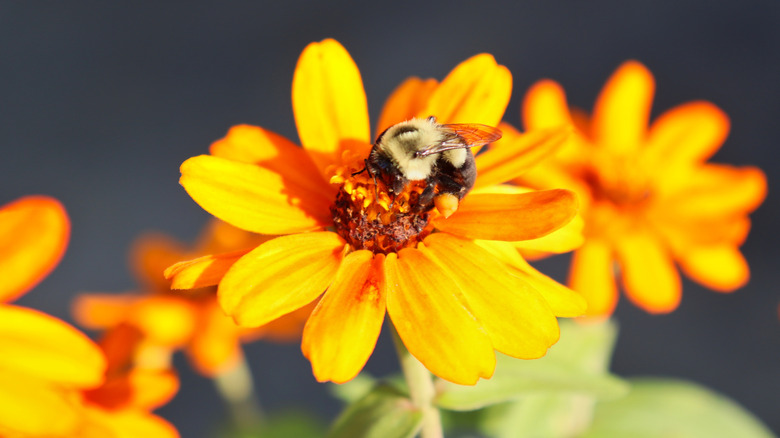
Although not all members of the daisy family have bug-busting properties, practically all will attract oodles of pollinators to your plot. No more relying on this old-school hack for your tomatoes! If you plant zinnias, cosmos, and mini sunflowers, you're effectively setting up an all-you-can-eat buffet for bees, butterflies, and any other insects that drive the pollination process. Pollinators especially love asters because they are composite flowers, offering a flat, wide place to land. Meanwhile, the center of each bloom is actually a cluster of tiny blossoms, rather than one individual flower. That means there is lots of nectar to go around, and if you choose an aster with a strong perfume, pollinators will travel for miles to feed on it. That heavy insect traffic not only brings a wonderful background hum to your garden, but your pepper harvest could go through the roof, too. Just remember our watering hack to make them spicier than ever!