

The Best Type Of Fertilizer You Should Be Using For Your Cucumbers
We may receive a commission on purchases made from links.
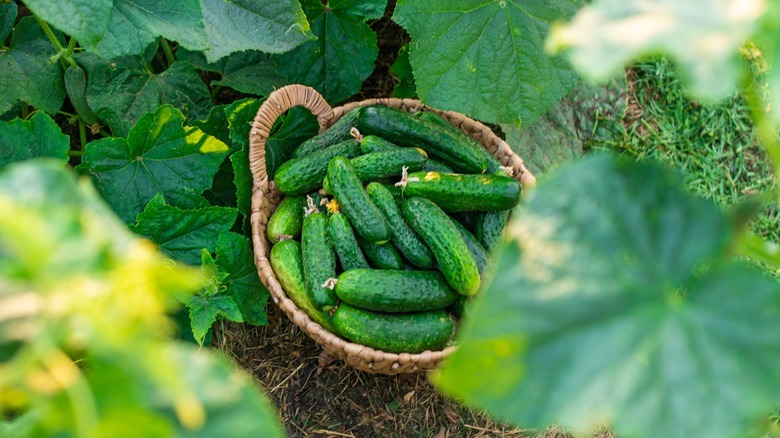
Cucumbers are a garden superstar that entice many a home gardener with the promise of delicious salads (like the viral TikTok cucumber salad) and snappy snacks. If you want to have success with your cucumbers this year, it stands to reason that you want to know how, exactly, to feed them. To that end, we're unpacking the best fertilizers for cucumbers ... most of which are higher in phosphorus and potassium than nitrogen.
When you first plant cucumbers, you should feed them a balanced 10-10-10 fertilizer that will give them all the nutrients they need to sprout. For the actual growing stage, however — the time after the plant flowers — you want to curb the plants' nitrogen intake. It's not that cucumbers should have no nitrogen at all; you simply want to ensure that the volume of both phosphorus and potassium is higher.
Cucumbers actually do well with tomato food, as the two crops have many of the same nutritional needs. Two commercial fertilizers that get call-outs as being good for cukes are Great Big Tomatoes Soil & Fertilizer Booster and Fox Farm Big Bloom Liquid Plant Food, both of which are Prime-eligible and enjoy great ratings on Amazon. Cucumbers are heavy feeders that require a lot of supplemental nutrition to thrive. They also need a ton of water to keep them sweet and plump, so don't skimp on either watering or feeding!
Social media gardeners share their cucumber fertilizing tips
We've run down a list of the best cucumber varieties to grow on the East Coast, but most cukes demand the same nutrition regardless of where you plant them: high potassium and phosphorus, with little nitrogen. Social media users have a lot to say about fertilizer and cukes, and much of it falls right in line with expert advice. "5-10-10 fertilizer," one Facebook poster put succinctly, while, upthread, another user echoed the gist of the statement: "Tomato Feed once cucumbers start flowering but don't over do it!" A Redditor suggested a combination of both commercial and natural products: "Seconding Fox Farm Big Bloom. Adding Neptune's Harvest Fish and Seaweed emulsion. Watered in or foliar spray. I water in a homemade brew each week, both a swamp tea and an aerated tea that contains the swamp tea + barrel pond water + worm castings + fish fertilizer and humic acid/blackstrap molasses and everything loves it."
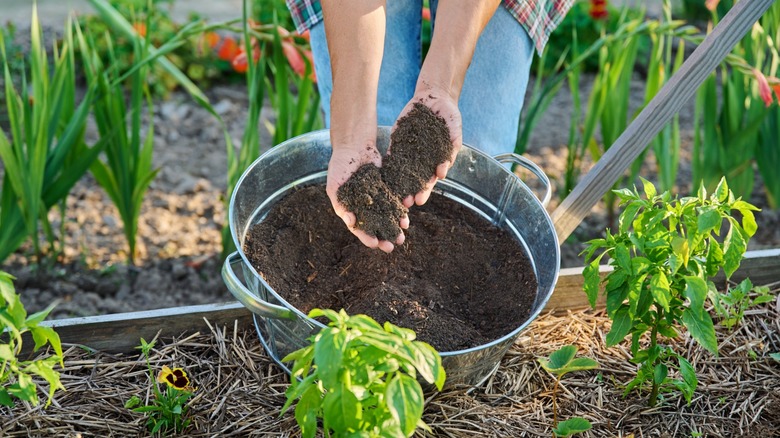
Elsewhere on Reddit, users swore by the old faithful for cucumber fertilizer: manure. Keep in mind that fresh poop is neither safe for plants that will be ingested (due to food safety concerns), nor is it good for the growing greenery, which will be burned by the strong compounds in the manure. For the best results, gardening manure should be "aged" for at least a year before using. Note that you can buy aged manure at both garden supply shops and from many farms, if you have access to some in your community. Just remember: when in doubt, cucumbers need phosphorus and potassium, no matter how you choose to give it to them, or which kind you're growing, including the best cucumber varieties for pickles.