

Skip The Miracle Gro And Use This Type Of Fertilizer For Bigger Potatoes Than Ever
We may receive a commission on purchases made from links.
From easy four-ingredient potato soup to summery potato salad flavored with pesto, we can barely enumerate all the delectable culinary plans we have for the spuds growing in our gardens. To that end, we have a vested interest in growing lots and lots of big, bodacious 'taters. Is there a secret to maximizing potato growth? It turns out that the answer is a resounding "yes," and that the magic potion is a fertilizer that's low on nitrogen.
Almost all plants need some combination of the "big three" nutrients: nitrogen, phosphorus, and potassium. A basic fertilizer like Miracle Gro has a balance of these. Potatoes, too, need all three, but they really need phosphorus and potassium in large amounts ... easy on the nitrogen, please. As "heavy feeders," potatoes require a tremendous investment of nutrients. While P and K (the chemical formulas for phosphorus and potassium) will lead to enormous, healthy potatoes, too much nitrogen will encourage tall, leafy tops and lead to tiny potatoes, since all the plants' energy is going upward. We've heard positive things about a low-nitrogen commercial fertilizer like Farmer's Secret Fruit & Bloom Booster, which has a 2-15-15 formula and great customer ratings, but there are also organic solutions to explore. Consider bone meal for phosphorus and langbeinite for potassium.
A good rule of thumb is that, if your potato tops are growing a bit too high, lush, and green, you can see that they are sucking nutrients away from your tubers. At this point, stop fertilizing your potatoes and reconsider your strategy. Potatoes will need to be fed often during the growing cycle to get large and heavy, but careful attention will pay off in a harvest that lasts you all year long!
Social media users share their experiences with fertilizing potatoes
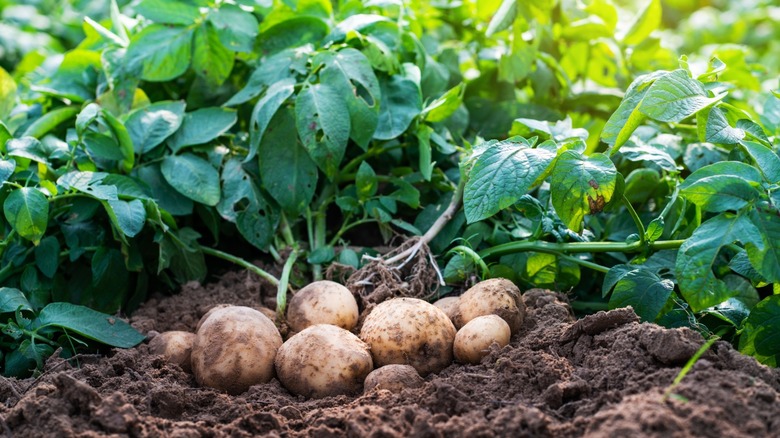
According to anecdotes from social media users, the answer to great potato fertilizer might be hiding in your chicken coop! "I use composted chicken manure with some bone meal and triple phosphate at planting time," divulges one Redditor. A Facebook commenter agreed: "I use worm castings, compost and chicken poop." Another Facebook comment simply showed an image of chickens walking over the potato bed as an illustration. Basically, Facebook can't stop talking about this organic, all-natural plant food: "I use lots of kelp and chicken manure from previous years. A little 10-20-20 with magnesium included in it works great for me."
According to the University of Nevada, Reno, chicken manure should ideally be aged or composted before being used in the garden to promote food safety and to avoid "burning" plants. Overall, however, home gardeners on social media report good experiences with planting and growing potatoes. While some plants have picky dispositions and lots of needy requirements for growing, potatoes are fairly low-maintenance as long as you feed them well.
On the other hand, potatoes' high potassium and phosphorus needs directly impact what companion plants work well in the same garden bed with them. There's a list of veggies you should never grow together, and potatoes have some bad matches. Other nightshades will compete for resources and therefore make bad neighbors. Cucumbers, too, are notorious potassium hogs — the unfortunate gardener who plants potatoes and cucumbers together faces an insurmountable task of trying to feed both constantly, and is probably destined to fail. Potatoes are happy when planted near wildflowers or dandelions, which repel pests, and when given the proper plant food ... sans extra nitrogen.