

Omega-3 Vs Omega-6: What Are The Differences Between These Nutrients?

Omega-3 gets a lot of attention, and with good reason. When we delved into the nutrient info of omega-3 fatty acids, we were delighted to find that these polyunsaturated fats — which get their name from the fact that they are three carbon atoms after the final double bond in the molecular chain, with "omega" meaning "end" — have a host of health benefits. These include supporting heart and brain health, with multiple other potential perks currently being studied by science. Certain fat-rich seafoods are great sources of omega-3, including caviar, but you can also get a plant-based fatty acid from many nuts and seeds.
Another major player in the discussion about healthy fats is omega-6, which doesn't get nearly as much attention. Yet, experts estimate that you eat between 15 and 17 times as many of them as omega-3s! As you may have suspected, omega-6 is so named because there are six carbon atoms between the last double bond and the tail of the molecule. It's another essential polyunsaturated fat that you need in your body but can't produce on your own.
Over time, omega-6 fatty acids have sometimes been controversial, with some dieticians suggesting that we eat too many of them and associating them with inflammation. However, emerging research actually seems to suggest that good sources of omega-6 might fight this inflammatory process instead of causing it (per Mayo Clinic). One main difference is that we don't eat enough omega-3 foods on the whole. It's not that we necessarily eat too many omega-6-containing foods ... it's more that some of us need to catch up on the omega-3s, because a balance of both is most effective.
Balancing omega-3 and omega-6 is best for your body
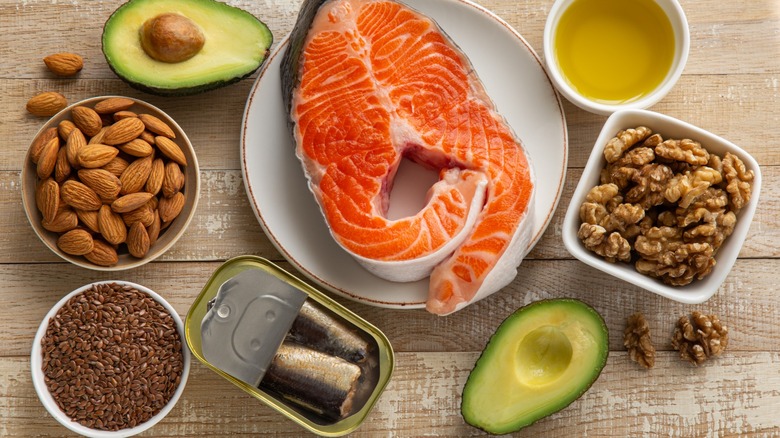
You're undoubtedly familiar with some of the foods that are highest in omega-6 fatty acids, like many vegetable oils, nuts, and egg yolks. You'll note that these aren't the same foods rich in omega-3 fatty acids, like oily seafood (like salmon, mackerel, and herring). Balancing your ratio of omega-6 fatty acids to omega-3 intake may be much more important than specifically limiting omega-6 consumption, according to the medical journal Missouri Medicine. In times before the Industrial Revolution, people tended to eat better-balanced ratios of these two fats. In an age of ultra-processed foods, however, that scale has tipped tremendously in favor of omega-6, and many modern folks should increase the amount of omega-3 fatty acids they consume.
We've already discussed that certain seafood is very high in omega-3. Current expert advice states that, to balance the benefits of eating seafood with the very real risks of mercury exposure from large predatory fish, you consume two servings of fatty fish per week. You can round out your omega-3 load with flaxseed, walnuts, and chia seed.
Although they aren't as effective a source of high-density nutrients, vegans and vegetarians can also consume leafy greens for smaller doses of omega-3 or take special supplements (with your doctor's knowledge, of course). Staying mindful of your omega-6 consumption without eliminating good food sources is also a best practice. It only takes a spoonful of oil or a handful of nuts to meet your daily minimum for omega-6, so you can easily hit those goals. Omega-3 foods are a bit tougher to eat in bulk. Ultimately, remember that balance is key.