

Plant-Based Vs Animal-Based Omega-3s: Is One Actually Better For You?
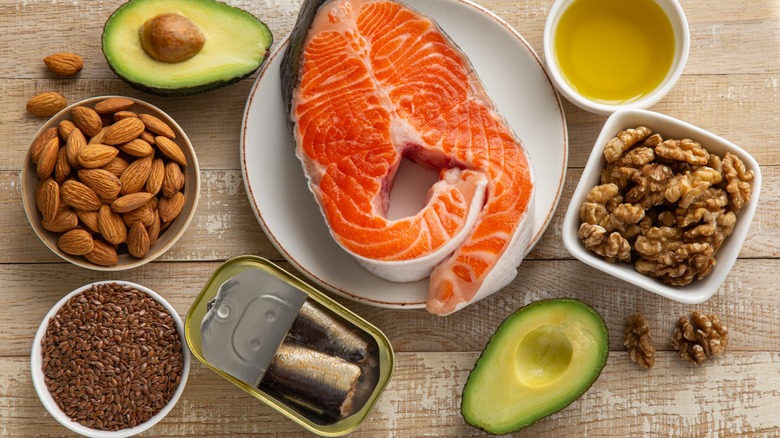
It's no secret by now that omega-3s can be powerful contributors to your body's well-being. When you discover the nutrient info behind omega-3 fatty acids and their potential benefits to your brain and heart health, you'll undoubtedly wonder why you aren't getting enough. Science shows that the average person isn't consuming as much omega-3 as they could ... and that might have something to do with the different types of omega-3 out there. Broadly speaking, the main forms are those contained in animal-based foods (DHA and EPA) and one that is plant-based (ALA). Basically, DHA and EPA can be used directly by your body, while ALA has to be converted biochemically into EPA and then DHA. A lot of crucial omega-3 is lost in the process — 85% or more, per the National Institutes of Health. For that reason, animal-based omega-3s are "better" in the sense that they're much more readily absorbed.
A major source of dietary EPA and DHA is fatty fish. There are a handful of foods with more omega-3 than salmon, but the pinkish fish is still considered a cornerstone of a high-omega-3 diet. A good acronym to remember for high omega-3 fish is SMASH: salmon, mackerel, anchovies, sardines, and herring. Some of these fish aren't the first ones that many folks reach for at the seafood counter, but there are a number of subtle ways to enjoy them, like adding canned anchovies to marinara sauce for both flavor and an omega-3 kick. Vegans and vegetarians may be able to obtain DHA and EPA from algae supplements based on the theory that the high omega-3s in seafood actually come from the animals' diets, but ALAs shouldn't be dismissed entirely.
Benefits of ALA omega-3 fatty acids
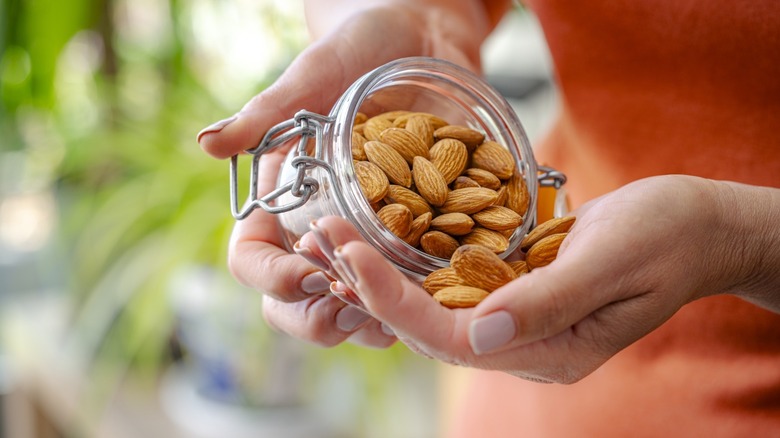
Let's not immediately toss ALA under the bus, because, at the end of the day, it's by far the most common source of omega-3s in Western diets. It's true that the ALA-to-DHA pipeline is an inefficient one that leaks most of its omega-3 in the process, but even a little omega-3 is better than none ... and many people get almost none in their diets. A 2023 study published in the International Journal of Molecular Sciences observed a link between a lessened risk of coronary heart disease and ALA intake, for instance. Ultimately, even if it's not converted into life-giving omega-3, ALA is stored and used by the body as energy, just like any other healthy fat. This means that, in moderation, ALA definitely has its place in a well-rounded diet.
The idea that animal-based omega-3 is "better" simply has to do with a fact of human chemistry, since EPA and DHA can be directly used by the body. It would be incorrect to assume that, on the other side, ALA is "bad" in any way. A more accurate statement would be that it is less efficient when it comes to promoting brain and heart health. Yet, some emerging research looks promising for ALA having benefits of its own, even if other omega-3 sources are richer.