

If You Don't Like Salmon, This Tasty Fish Has Nearly As Much Omega-3

Salmon is often cited as one of the most-consumed fish in the U.S., and it's easy to see why. It's one of the simplest fish to cook and is a good source of essential vitamins, as well as heart-healthy omega-3 fatty acids. The American Heart Association even urges everyone to eat a minimum of two servings of fish a week. But if you're among those who really can't stomach salmon, give trout a whirl! According to the USDA, a single 3-ounce serving of wild rainbow trout contains a combined 209 milligrams of DHA and EPA, the two omega-3 fatty acids found in animal proteins, compared to a similar serving of wild Atlantic salmon, which brings 433 milligrams of omega-3s.
That said, the levels of omega-3 in trout fillets can vary, depending on how the fish was fed. A Norwegian study found farmed trout that were given omega-3-enhanced feed stored more of the fatty acid in their flesh, ending up with 26 milligrams per gram of fillet — 10 milligrams more than salmon kept under the same conditions, though with no apparent benefits to the trout's health. Not every consumer can get behind the concept of farmed fish, but it's worth knowing that rainbow trout raised in the United States gets the thumbs up for environmental sustainability, and it's on the Seafood Watch Super Green List.
If the omega-3 levels weren't tempting enough, both farmed and wild trout are excellent sources of protein, while their fillets are laden with essential nutrients such as zinc and selenium. Plus, if you're bored of getting vitamin B12 from shellfish, then trout has got you covered.
Trout is as flexible to cook as salmon and goes with almost everything
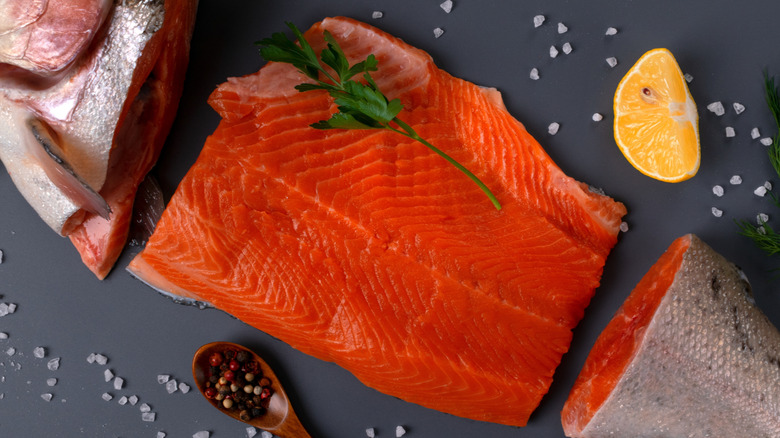
There are many different kinds of trout in America's waterways, but for home cooks who do their, ahem, fishing at the supermarket, freshwater rainbow and their salt-water brethren, steelhead, are among the most popular. Trout is often described as nutty and mild, while its smoked version is every bit as delicious as its salmon counterpart (flake it into scrambled eggs to elevate this breakfast favorite). Along with all that flavor, it can retain every scrap of its solid nutrient profile, depending on how it's cooked.
At first glance, it can be easy to mistake an uncooked fillet of trout for a side of salmon, though it's usually that slightly deeper shade of pink flesh that gives it away. What both fish share is versatility, with chefs preparing them in a myriad of different ways. You can pan-sear, steam, bake, and broil trout, then eat it with the bones left in or butterfly it and remove the bones. Because it cooks so quickly, your dinner can be ready to eat in minutes.
Despite this fish's somewhat delicate flavor, trout pairs well with many other ingredients, from buttery, herby sauces to sweet, earthy mushrooms and crisp green vegetables. We especially love infusing fillets in a spicy marinade — don't worry, trout can take it — or smearing a whole fish in a blend of mustard and Worcestershire sauce, then pan-frying it for the crispiest skin and a flavor knockout!