

This Edible, Easy To Grow Flower Is A Beautiful Companion For Squash
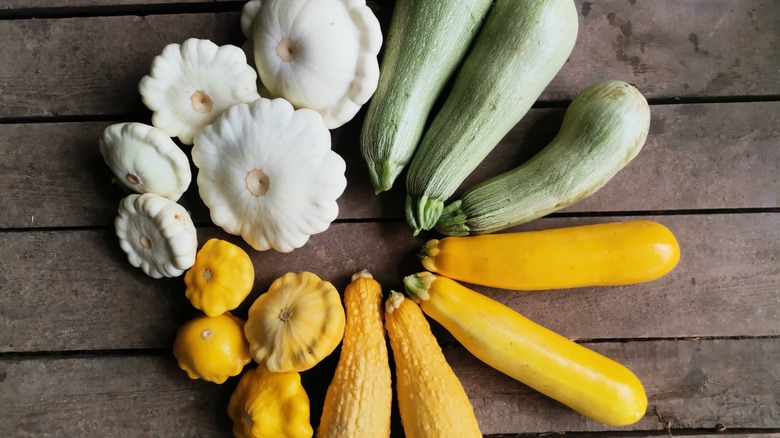
Summer squash are what I call a 50-50 crop. There's a 50% chance I'll grow so many I'll have to hand out zucchini to everyone who has a kitchen, or I'll be staring at the ground wondering where I went wrong. So far so good with the plants in my garden; they've got plenty of space to grow, the pollinators are hard at work, and the soil is full of nutrients. But to give my squash the maximum opportunity to thrive, it's best to pull out the big guns: Nasturtiums. As companion plants go, they're straight out of the top drawer. Want a bigger lettuce harvest? Plant nasturtiums nearby. Are your pea plants under-producing? Nasturtiums will help. Eager for a bumper crop of peppers? You get the picture.
The flurry of red, orange, and yellow nasturtium flowers don't just look pretty; they act as a trap crop for all the aforementioned veggies, and they'll do the same for your summer squashes. Aphids are drawn to them like moths to a flame, but — importantly for growers of zucchini and other summer squash — nasturtiums also lure dreaded squash bugs away from your plants. That's not all. They also help to attract good insects, such as aphid-munching hoverflies, as well as all kinds of pollinators, ensuring your zucchini plants produce lots (and lots) of veggies. Nasturtiums are the all-round good guys of your garden.
Nasturtiums are easy to grow in the garden, and versatile and delicious in the kitchen
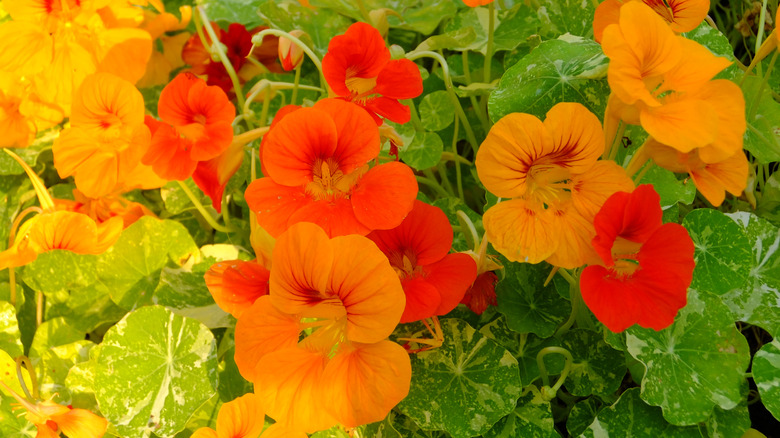
Unlike some species, nasturtiums are incredibly easy to grow. They're annuals, so you have to plant them every year, but that's just about their only black mark. They don't mind even poor soil (though maybe don't rely on burying pennies to give them a boost), prefer full sun but will tolerate some shade, especially if you're in a warmer zone, and don't need fertilizer or gallons of water to thrive. Plus, if you're short of space, nasturtiums — which can grow to an impressive size — can be grown up a trellis. There are many varieties to choose from too, including trailing nasturtiums and smaller, bushier types, as well as glorious, heirloom types with double flowers. Our favorites include Canary Creeper, Peach Melba, and the Jewel series.
Alongside their full-time job as a companion plant for squashes and other veggies, nasturtiums do double duty as an entirely edible plant, from their seed pods to their flowers. Their flavor is often described as peppery but some have a floral hint too, and the sky really is the limit when it comes to cooking with them.
The bigger leaves make for a delicious wrap or can be stuffed, while older ones can be turned into a fabulous pesto or cooked like spinach. The flowers add both color and pep to salads and charcuterie boards, will give a nice twist to muffins or cookies, or you can turn them into a jelly that makes an amazing glaze for grilled meats — or some of your home-grown zucchini!