

Canned Salmon Vs Fresh: Does One Type Pack More Nutrients?
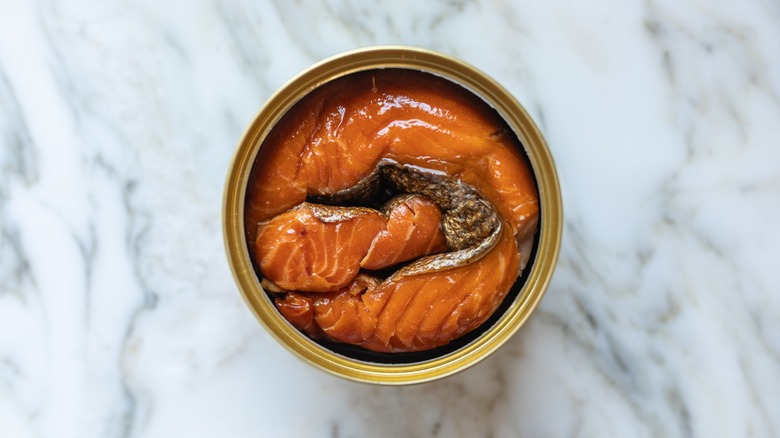
You probably already know that salmon is a nutritional powerhouse — some even dub it a superfood. Salmon is loaded with nutrients like vitamin B6 and those all-important omega-3 fatty acids, but there's an important distinction to make when it comes to canned salmon versus the fresh stuff. Which is more nutritious? We hate to be wishy-washy, but the honest answer is a big, fat "it depends." On the whole, fresh salmon tends to have more of the specific nutrient that folks prize in this type of seafood, but canned is no slouch ... and much of the nutrient difference actually has to do with wild versus farmed salmon and not so much the method of delivery.
Fresh salmon delivers more omega-3s than canned, which is no surprise to anyone who knows about the difference in omega-3 content between fresh and smoked salmon. That's because processing fish with heat destroys some of the fatty acids; it's not up for discussion. Omega-3 is one of the biggest health benefits that conscientious consumers want from salmon, since animal-based omega-3s can be hard to source in Western diets.
But don't sleep on canned salmon, because its omega-3 content, while less than fresh, is still admirable compared to many other foods. On the whole, salmon canned in oil will retain more omega-3s than salmon canned in water. Due to processing, canned salmon also typically contains a tiny bit more protein, selenium, and vitamins. However, canned versus fresh may not matter as much as farmed versus wild-caught, as wild-caught salmon has more nutrients and less chance of pollutants.
Salmon is a nutritional powerhouse no matter how you slice (cook) it
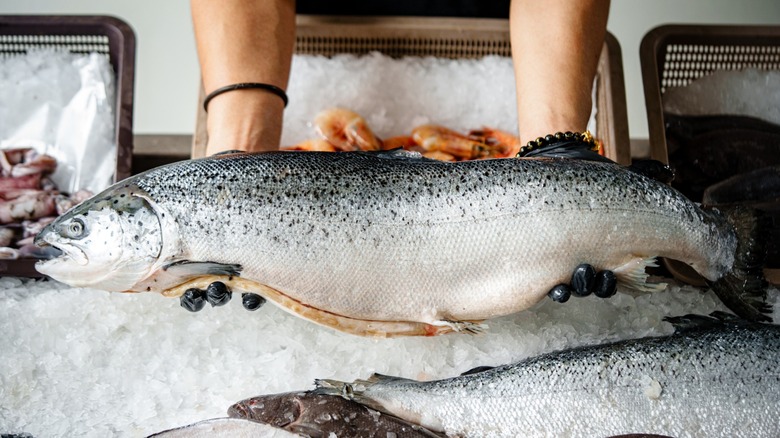
The question of fresh versus canned salmon isn't a cut-and-dried one, especially because it risks demonizing one of two foods that are both excellent nutritional choices. Science has proven that cooking salmon the wrong way can destroy omega-3s, so picking fresh filets isn't always a guarantee that you will get more DHA and EPA — and, plus, canned salmon stakes its own claim with plenty of underrated nutrients of its own. We think it's silly to refer to a "better" or "worse" option when it comes to almost any kind of salmon, because salmon is great for you in general, being packed with tons of vitamins and minerals. Where fresh salmon really shines is in terms of one major nutrient, omega-3, and it's true that, for many health-conscious home cooks, this is the goal. But salmon is a great choice either way. The ultimate decision as to what form of salmon you choose may actually come down to convenience and not nutrients.
Canned salmon often has more sodium than fresh (as do many canned foods), which can be a consideration for consumers seeking a low-sodium diet. On the other hand, canned salmon is shelf-stable and endlessly versatile. For novice cooks, it may also be more approachable, while fresh salmon is considered more upscale, and you can't beat the buttery taste of a perfectly cooked fresh salmon plank. At the end of the day, both fresh and canned salmon are good for you; the decision might be more about what you need out of your meal.