

This Classic Herb Is So Easy To Grow And It's Packed With Antioxidants For Brain Health
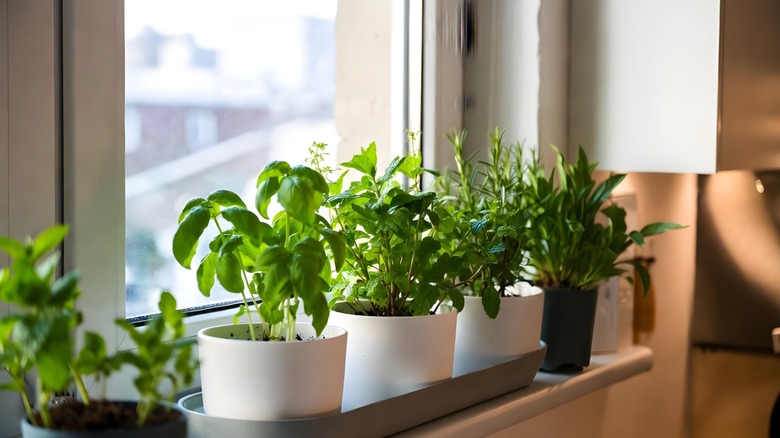
Sage lands on our list of perennial herbs that you can plant once for a year-round harvest because it grows very well in indoor pots. If you live in an especially warm climate, you can go ahead and read up on the best areas in your garden to plant herbs right now, but, for many of our readers, the high heat of midsummer may be too late for planting sage in the ground. No worries, though — if you have a container and a sunny window, you can savor the bracing scent and pungent taste of sage all year long and enjoy its multiple accompanying health benefits, which include brain-boosting antioxidants.
Common sage contains more than 160 polyphenols, a type of plant-based antioxidant that neutralizes harmful free radicals in the body that are linked to several disease processes. While polyphenols have a ton of benefits overall, it's incredibly intriguing that they are scientifically linked with increased focus and memory. They may be used therapeutically in aging adults with early onset memory loss, but even younger, unimpaired folks see a boost in concentration with consumption of polyphenols ... just like those found in sage.
Sage, most importantly, won't tax the budding gardening skills of novices. If you keep it well-drained to prevent root rot, you will find that it doesn't ask for much in the way of fussy tending. Trimming it encourages fresh growth, so you'll always have enough herbs to enjoy if you have a healthy plant. It can be tricky to grow from seed, but home gardeners have found tremendous success with either repotting seedlings or propagating new plants by cutting or layering methods.
Enjoy your sage plant for its yumminess and health benefits
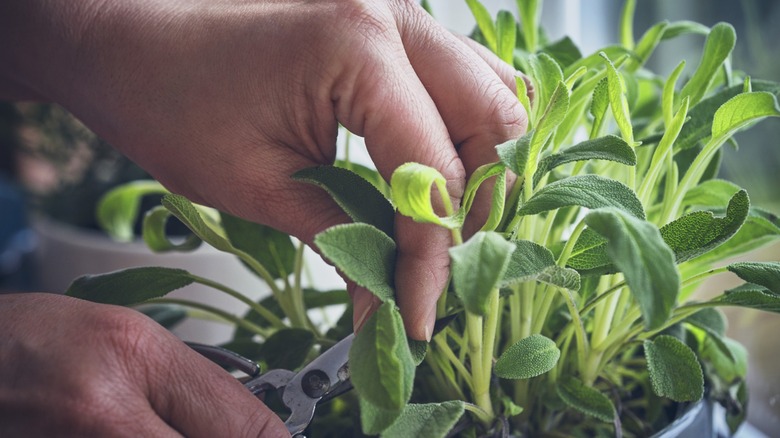
With a little TLC towards your sage plant(s), you may find yourself with tons of fragrant sage! There aren't as many uses for fresh sage as for dried, since fresh sage has a very strong, distinct flavor that can pull attention from other components of a dish. When this is the aim, fresh sage is great! If not, knowing how to substitute dried for fresh herbs is no problem at all. Many people reap the most benefits from sage by drying the leaves and drinking them in a tea (technically, a tisane) daily. All you need is dried sage and hot water, but feel free to add lemon and sugar to amp up the brightness of your cuppa. Another way to enjoy sage's flavor without blowing out your palate is to make a sage-tinted salt by mixing dried sage with flaky sea salt and sprinkling it over your savory dishes.
None of this is to discourage cooking with sage! You know about sage in Thanksgiving stuffing recipes, of course, but that's not at all the limit to its uses. Sage goes great with fatty meats, especially sausages. Speaking of fat, how about a sage-infused olive oil, or, for that matter, an infused vodka for cocktails? A grapefruit-sage mimosa sounds absolutely delish, doesn't it? Sage also sings with strong cheeses, like goat cheese in gnocchi, or leaves fried in brown butter and mixed with cubed butternut squash. You'll have tons of fun experimenting with your sage bounty, and, best of all, you will know that you might be boosting your brain health as you chow down!