

Start Your Morning Cup Of Coffee The Way The Cowboys Did On The Trail
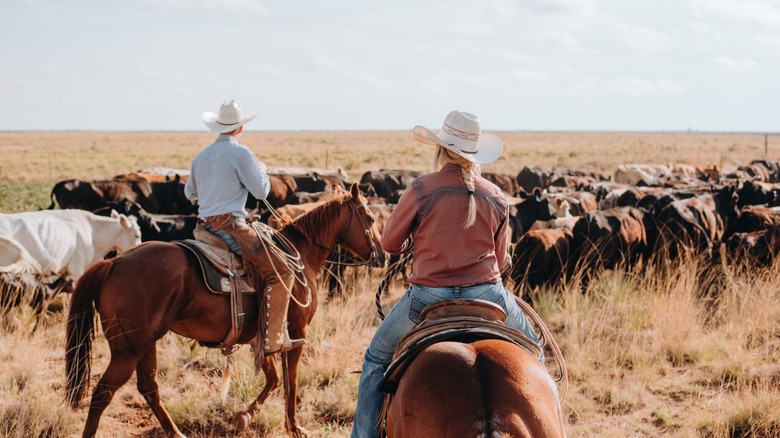
Of the foods that cowboys ate on the trail, one of the most familiar and beloved entries on the list was that essential morning pick-me-up: coffee. Just like most of us, cowboys loved them a steaming cup of joe in the morning. It gave them pep for a long day of hard work, and its warmth and flavor reminded them of home when "home" was far away. Of course, cowboy coffee wasn't exactly the same thing you make at home. Instead of iced lattes, they had Arbuckle beans, made with a roasting method that baked sugar, Irish moss, and eggs onto the beans so that the resulting brew needed no flavoring on the trail and lasted longer than it would have otherwise. When actual coffee was in short supply, cowboys brewed an elixir of chicory or even dandelion roots to get their fix.
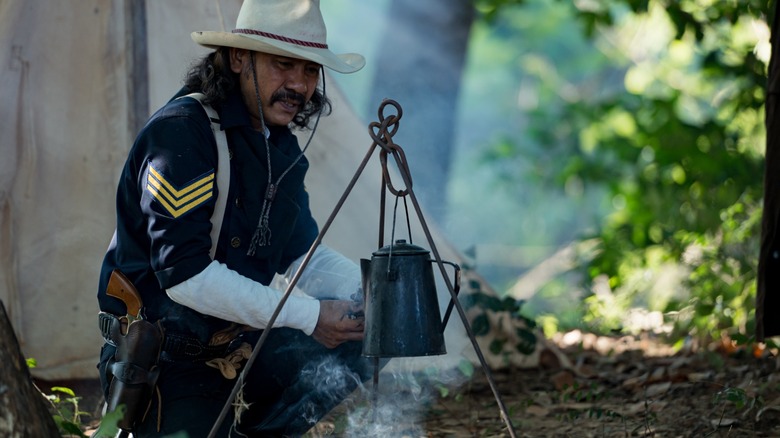
What makes cowboy coffee most replicable in today's world, however, is the brewing method. We've covered how to make coffee without a coffee maker, and it's true that there were no countertop brewers or Keurig machines in the Old West. Cowboys often made do with just coffee grinds and hot water heated in a pan or kettle over the fire. The grounds were added to the hot water and stirred. If you mastered the method, the grounds would sink to the bottom, allowing the brewed coffee to be poured into a waiting mug without any grounds spilling into the cup. Today, you can "cheat" the method the way some resourceful cowboys did by straining the coffee through a clean cloth. For historic accuracy, you might even use a clean bandanna.
What are the benefits to brewing coffee like a cowboy?
On a Reddit thread discussing cowboy coffee, one wryly humorous user discussed a very real downside: "Like percolated coffee, you gotta stop it yourself, and getting those coffee grounds out of your teeth sucks regardless of the grade of coffee." Another commenter, however, mentioned one of their tricks for mastering the process and avoiding that pitfall: "I make it cowboy style when I'm backpacking. It tastes better than instant and doesn't require special equipment, just my pot. I grind it just before the trip, considerably finer than I would normally. A finer grind helps the grounds saturate and sink."
This last comment brought up two salient points about cowboy coffee: it's a viable option for those cooking outdoors or otherwise roughing it when camping, hiking, or homesteading; also, it produces a good-to-great cup of coffee! There's definitely a learning curve to making it without getting a mouthful of grounds, and today's drinkers may prefer to bring some creamer and sweetener (sugar- and egg-glazed beans are in short supply nowadays).
Still, don't sleep on cowboy coffee for strength and flavor. Cold water added to the pot right before serving tends to make the grounds settle, but egg shells were also historically used. Trial and error will produce results that suit you, and the process will be fun and nostalgic. Cowboy coffee is a more authentic product of the Old West than the viral "cowboy caviar" dish and represents a link to the way our forebears kept themselves warm and caffeinated — a heritage worth carrying on.