

Don't Worry If Your Basil Flowers, Just Give It A Haircut
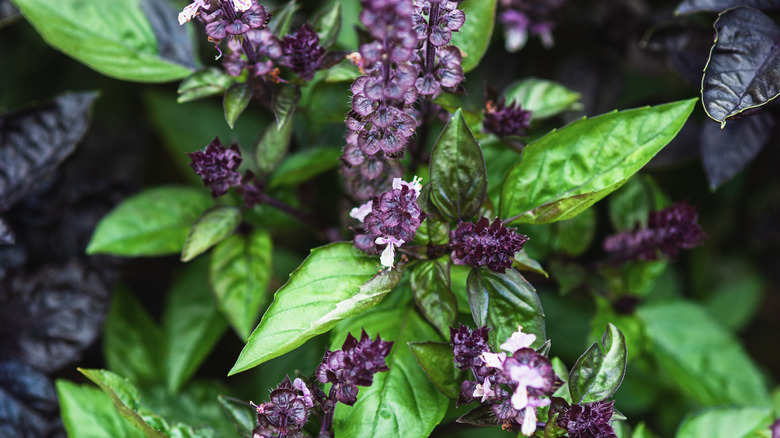
The purpose of most plants is to grow flowers, attracting lots of lovely pollinators so it can produce fruit or vegetables, and eventually seeds for a brand new crop. But as many a gardener knows, there are some species that we actively prevent from following that natural cycle, and basil is one of them. While it's easier than you think to get lots of leaves from even a store-bought plant, when that same plant starts to sprout tall flower stems, it's tempting to believe your herb's days are numbered. That's because when flowers appear, the plant is shifting gear. Instead of putting all its energy into growing leaves for your recipes, it's focusing on reproducing and making seeds for the next generation of basil plants.
Catch them early enough and these flower buds can be nipped off the top, allowing the plant beneath to continue producing lots of tasty leaves. However, if you're a little late to realize what's going on — as has happened to me — all is not lost. Just take a pair of scissors and give your basil a haircut! More precisely, snip out the flower shoots, cutting them as close to the base of the stem as possible. This will prevent the plant from literally going to seed. Don't worry about being a little too exuberant; as one Redditor noted that "It seems to be impossible to overprune a basil plant. The more you cut, the more new leaves you'll get."
You can get snippy with cilantro and lettuce too
Don't throw away any basil flower stems you cut off. Pop them in a vase and they'll bring their lovely distinct odor to your kitchen. Alternatively, drop them in your next batch of pesto or infuse them in a tea. As for the plant left behind, many people said their leaves actually tasted a little stronger for the pruning, which is good news if you love basil. Best of all, the haircut hack doesn't just apply to this herb.
Lots of green-fingered home cooks complain online that their cilantro bolts without much warning. Although it does produce pollinator-friendly flowers, it's not so great for your kitchen herb store. However, just as with basil, regular trimming will keep your cilantro under control and stop it bolting all over the place. Focus on snipping the outer leaves to fool the plant into thinking it's not time to go into reproductive mode just yet, and the fresh leaves ought to just keep on a-comin'.
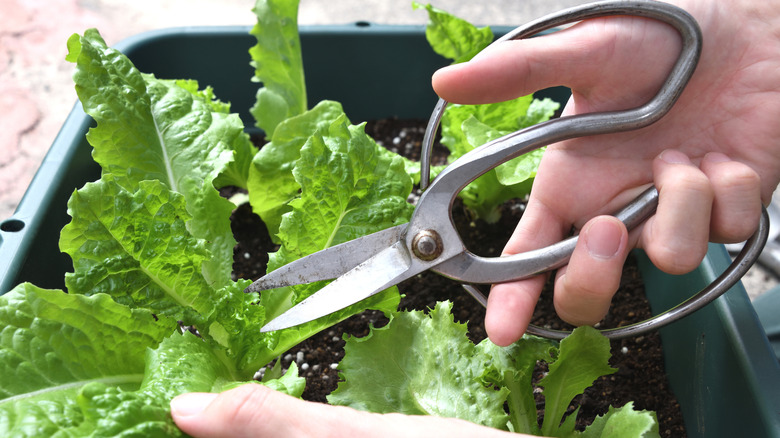
We've previously explained the best fertilizer to get a bumper crop of lettuce, and advised on their ideal companion plants, but if you're up to your ankles in leafy greens that are in danger of going to seed, a quick trim should work for them, too. Some gardeners with larger plots use a push mower to keep their lettuce crops in check, cleanly cutting back half of their crop one week and the other half the next, knowing that each will grow back in the interim and provide a near-endless supply of fresh, delicious salad (for the season, anyway). If you're working on a rather smaller scale, go in regularly with a pair of scissors or shears to cut them down to size.