

This Beautiful Herb Is Delicious, Easy To Grow, And Beloved By Pollinators
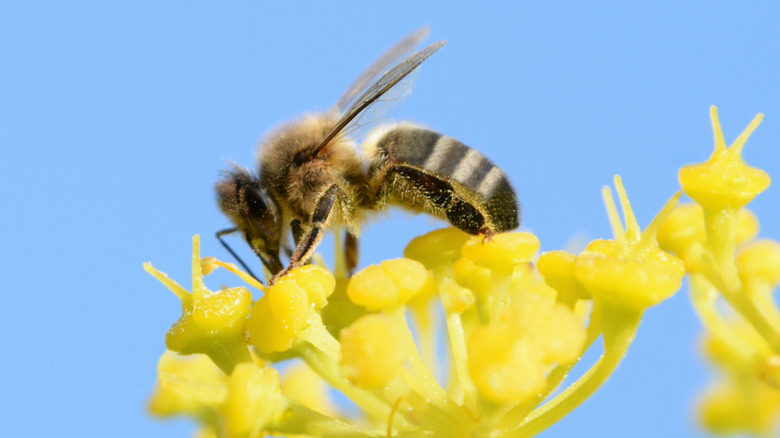
Our gardens, no matter how big or small, are near-constant hives of activity. From roots inching their way through the soil to slowly swelling fruit and vegetables, the production process is driven by pollinating insects. If you want to attract as many as possible to your plot, you need fennel. Lacewings love it and so do bumblebees, hoverflies, and tachinid flies, to name just a few good pollinators. If that's not enough to have you scooting to the store for some seeds, fennel is one of the easiest plants to grow, and you'll get both a herb and a veggie from it.
If you're worrying that midsummer means you're too late to the fennel party, don't panic! It's one of several vegetables that you've still got time to plant, and if you live in USDA zones 6 to 10 where the winters are milder, fennel will continue to do its thing throughout the colder months. It will thrive in almost any spot, from full sun to partial shade, and can tolerate just about any kind of soil apart from heavy clay (as it can get too waterlogged there). Our mason jar hack can help you test the soil before planting.
There are several varieties to choose from, including perennial sweet fennel (an herb you can plant once and enjoy forever) and common fennel, both of which are popular with gardeners. Be aware they can get big fast, growing up to 4 or 5 feet tall, though Florence fennel, also known as finocchio, reaches around half that size. That said, it is not as hardy as the other species, and as a biennial, will die after its second year.
Fennel comes with one big gardening don't but lots of do's, especially in the kitchen
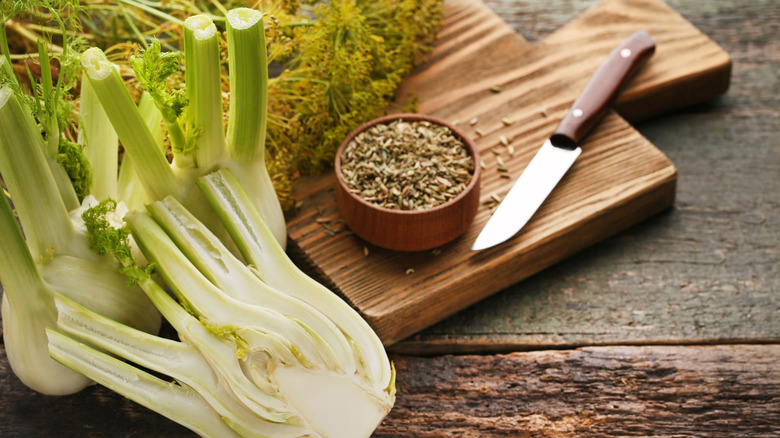
Easy to grow and a friend to many pollinators fennel may be, but it also comes with one sizable caveat. Like some other unneighborly plants, it is persona non grata for many other veggies and herbs in your plot, thanks to the growth-inhibiting compounds it releases. If you've got carrots, tomatoes, basil, peppers, potatoes, or kale goin' on, plant your fennel as far away from them as possible to minimize any disruption to your harvest. As long as you tick that box, you should be rewarded with a fragrant, aniseed-forward herb to use in a wide range of recipes.
Let's start with the seeds. Snip off the fronds, then wash and dry the seeds, pop them in an airtight jar, and you've got an instant supply of licorice-like flavor that's perfect for hearty stews, complex casseroles, or warming curries. As for the greenery, if you love fish, those frothy, delicate fronds are the perfect accompaniment. Blended with woody herbs, fennel fronds will also help elevate red meat and bring a dash of sweetness to umami mushrooms.
Of course fennel isn't just an herb. Although wild fennel doesn't produce a bulb, other varieties do. It's delicious chopped up and added to a green winter soup or cooked in a foil-covered pan with a little garlic and salted butter; the sweetness of the aniseed balances beautifully with the bulb, while the velvety flesh literally melts in the mouth. Fennel can be as versatile as a potato; you can roast it, pan-fry it, or pop it on the BBQ for a smoky-yet-sweet veggie.