

The Best Way To Cook Salmon For Maximum Nutritional Value
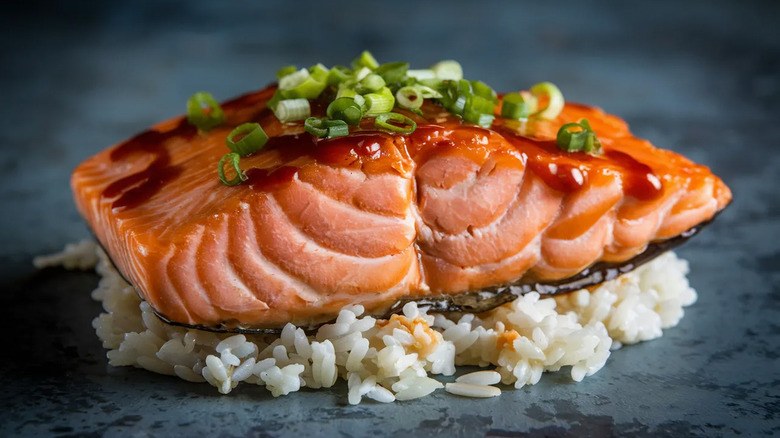
We know a lot about salmon. We know it's packed with omega-3, as well as heaps of this essential vitamin. We also know that it pairs beautifully with everything from fruity salads and spicy sides to a plate of fluffy mashed potatoes. As well as being a flexible ingredient, salmon can be cooked in many different ways, though if you want maximum nutrition from your fillets, many people suggest avoiding high heat and using gentler wet-cooking methods to lock in all the salmon's natural goodness. That's definitely the case if you want to hang on to the fish's omega-3 fatty acids, which have a raft of health benefits for our bodies but tend to fall apart under intense heat. But it's not the only nutrient that can be affected.
We've previously examined whether cooking impacts the omega-3 in salmon, but our favorite pastime can also negatively affect the levels of other important vitamins and minerals, including the B vitamins, calcium, and vitamins C and D. The trick is to choose a cooking method that enables salmon to retain as much of its nutritional profile as possible. That means opting for either steaming or poaching, one of the most overlooked ways to cook this tasty fish.
Steaming is one of the best ways to keep salmon's nutritional goodies intact. It minimizes contact with water, can be done quickly at a lower temperature, and will produce the juiciest fillets imaginable, though you won't get crisp skin. For poaching, don't be tempted to use tons of water for a single fillet. Although it's a good way to retain omega-3 fatty acids, vitamins E, A, and D in salmon are all water-soluble, which means a good amount of them will seep into the cooking liquid.
Salmon's nutrients always can't stand the heat, but they do love a steam bath
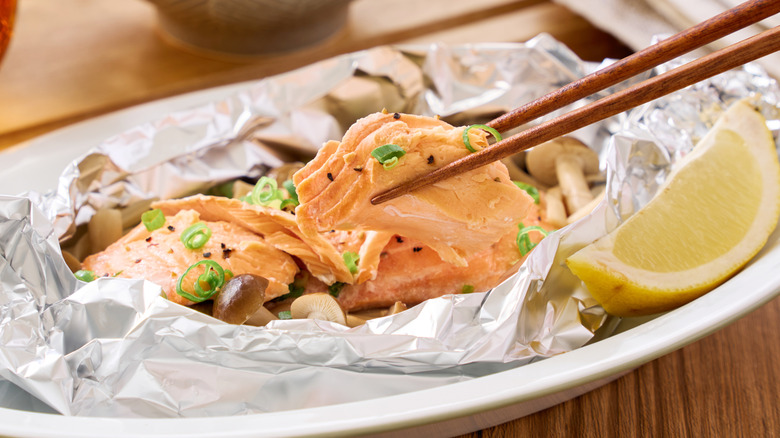
Poaching is one of the healthiest ways to cook fish, but we'll admit that it's not always the most exciting or tasty. Compared to poaching, grilling a juicy fillet of salmon can open the door to all sorts of flavor ideas, but, as with broiling, the high heat can result in the loss of some of its crucial B vitamins. Oven baking is even more destructive nutrient-wise, because it tends to take more time than other methods, cutting the amount of B vitamins by up to 40%.
If you prefer to pan-fry your salmon to get that skin nice and crispy, there is some good news. Although it's done at high heat, frying is a relatively fast way to cook fish and doesn't use water, so the nutrient loss is minimal. If you prefer to use oil to pan-fry, opt for heart-healthy types, such as olive or coconut oil. We've previously suggested using the air fryer to cook salmon as a time saver, but here are some more glad tidings. It turns out that this nifty kitchen gadget can also help preserve all the vitamins, minerals, and omega-3s in those fillets too, assuming you're using a quick method. That said, if you're a devotee of other methods, you can still get plenty of nutritional benefits from salmon — just maybe not at quite the same level.