

Why American Cowboys Fell For Beef Jerky
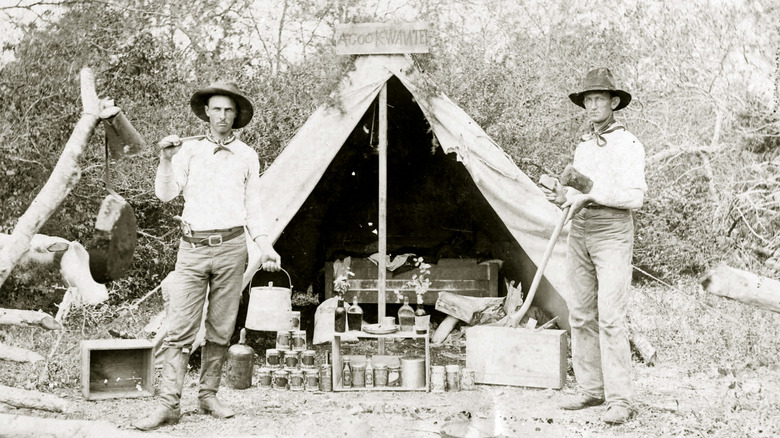
Coffee, beans, and beef jerky. They're arguably the most well-known of all the foods cowboys ate on the trail, and all three are still around today. Modern versions of coffee and beans are probably a lot tastier than what was on the menu in the 1800s, but jerky? It's pretty much the same now as it was then. For the cowboys herding cattle across America's landscapes, jerky wasn't just tasty, it could be transported in bags or pockets over vast distances without going bad.
Dried meat could be eaten as it was (and presumably chewed for miles), or added to a stew to give a hot dinner an instant, meaty boost. Although they couldn't always eat the animals they were overseeing, beef remained a common staple of the cowboy diet, and meat from hunted bison, deer, or elk was also cured or dried.
American cowboys weren't the first ones to chow down on jerked meat. In an entry from 1806, William Clark (of Lewis and Clark fame) wrote about the party having "dried meat which was cured at our last encampment below exposed to the Sun." The method wasn't new to their expedition, either. Inca tribes ate dried, salted meat called ch'arki, passing it on to Indigenous Americans. Even pirates cooked that way, centuries before cowboys put a foot in the saddle.
You can make delicious beef jerky that would make a Wild West cowboy whoop
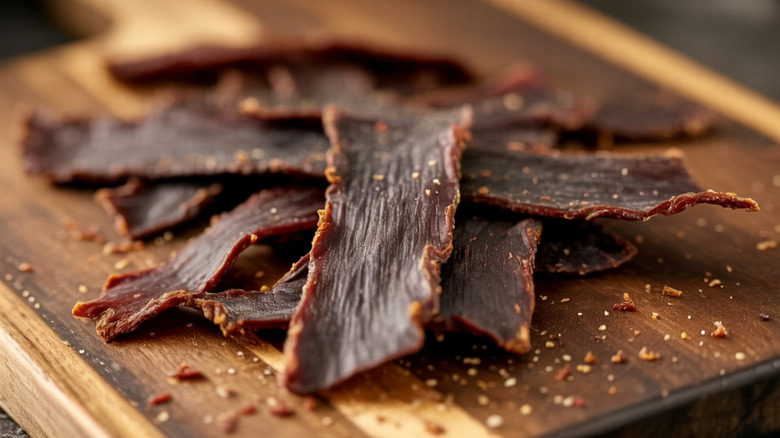
Even in the wilds of the American West, it was easy to make beef jerky. Cowboys or the cooks who travelled with them would lay strips of flesh over fires, using the smoke to cure them, or simply leave them to dry naturally in the sun or wind. In the 19th century, jerky was an essential protein (though our rugged cowboys wouldn't have thought of it in those terms). Today, health experts warn that although it can be a good source of zinc and iron, jerky often has a lot of salt, so eating too much is not advised.
You don't have to be a fan of the Wild West to make your own jerky. Beef, pork, and salmon are all easy to dry or smoke, but don't sleep on venison, either, if you're in the mood for something a little different. You can play around with marinade seasonings, depending on what flavor profile you're looking for, but soy sauce, brown sugar, onion and garlic powder, are all good places to start!
If you have a dehydrator, the meat needs around 4 to 5 hours (make sure the internal temperature hits 160-165 degrees Fahrenheit). The jerky will keep for around a week in a ziploc bag in the fridge, but in the freezer in a vacuum-sealed container, it will last for years. Who knows, it might give this steakhouse a run for its money!