

Are Bell Peppers Easy To Grow Indoors?
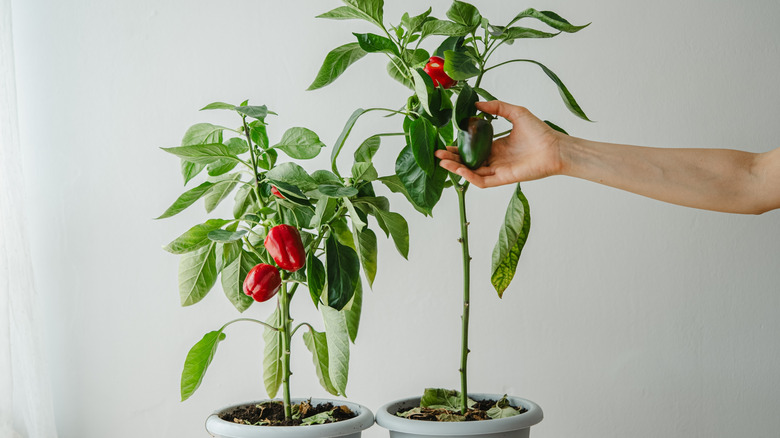
We've previously offered advice on the best part of your yard to grow peppers, but what if you can't or don't want to grow them outside at all? That's not a problem. Raising bell peppers — or even the hotter kinds of peppers — indoors is relatively easy, though there are a few things to keep in mind. It's important to try to follow the veggie's natural growing cycle, so planting in spring is best, preferably after the last winter frost, even though your seedling will be insulated from the cold. Also, be sure to pop them in nutrient-rich soil.
You can transplant your seedlings to bigger containers when they have their first true leaves, but it's imperative they get at least 12 hours of light a day. If you can't keep your pepper plants on a consistently bright windowsill or spot on your patio, it might be worth investing in a hydroponic system, which is ideal for indoor use.
Alongside that illumination, your indoor peppers also require heat. Wherever they call home should be held at a temperature of 70 to 85 degrees Fahrenheit (a heating mat can help if you can't keep your thermostat that high). Many hydroponic systems will also help you monitor their levels, but if you're growing in traditional containers, water your peppers only when the soil feels dry — and don't forget our clever hack for growing spicier pepper fruits!
There are a few pepper pitfalls to avoid, but lots of varieties to grow indoors
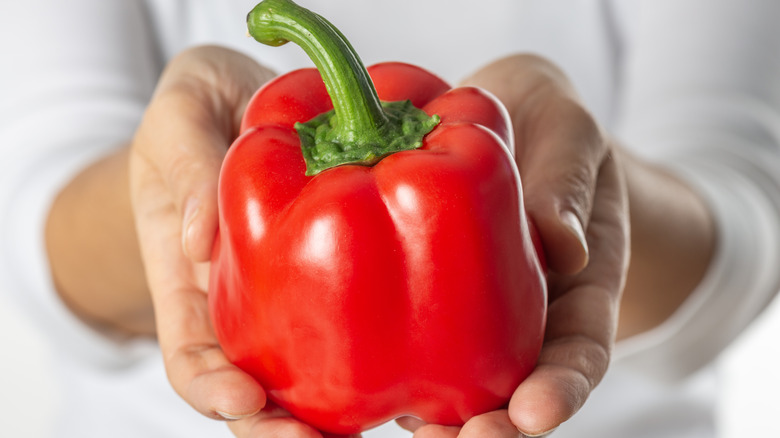
Growing peppers indoors can be straightforward, but beware of a few potential pitfalls. We said light exposure was imperative, so if your plants are a little thin and leggy, it could be they're not getting enough. As they grow, your peppers will need more nutrition than what the soil can provide, so top them up every three weeks or so with the best type of fertilizer for your peppers, and they'll be blooming in no time.
The arrival of those flowers is another unmissable step. Indoor pepper plants aren't available to pollinators, so you need to hand-pollinate them. Some gently shake the flowers to get that precious pollen where it needs to be, while others use a clean cotton swab. It's an old-school trick that works for tomatoes too. When your pepper plants produce fruit, don't be tempted to wait for several to be ready before harvesting them. The more you pick, the more your plant will grow.
There are many varieties of pepper that are perfectly happy being grown indoors, though be careful to keep them out of the reach of children or pets, especially if you're growing hotter kinds. Bell (both full-size and mini), jalapeños, habanero, and cherry peppers will all do fine — as long as you provide the conditions they need. If you're up to your elbows in basil from a store-bought plant, why not try your hand at growing peppers indoors using seeds saved from supermarket veggies?